
Key Takeaways
- The Structural Hazard: Left unchecked, a honeybee colony can build massive wax and honey structures inside your property’s walls, causing major rot and structural damage.
- Why DIY Fails: Aggressive swarming, hidden hives, and lingering pheromones mean standard sprays rarely solve the problem completely.
- The Eco-Friendly Focus: Whenever possible, true professional bee management prioritizes safer live extraction and relocation over extermination.
- Comprehensive Remediation: Resolving a bee problem permanently requires removing the physical honeycomb, washing away scents, and sealing structural entry cracks.
The Hive Next Door
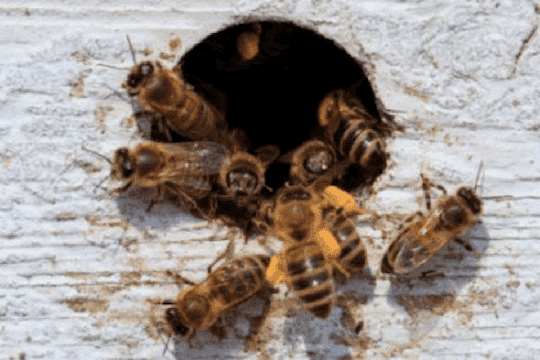
When spring arrives across the Wasatch Front, our local valleys experience a vibrant burst of life. While blooming trees and greening lawns are welcome signs of warmer days, they also signal the return of stinging insects. For a property owner, finding a bustling colony of bees setting up a permanent residence on your property changes your outdoor spaces from a haven into a hazard.
Whether you are a homeowner trying to ensure your backyard is secure for children and pets, or a local business manager working to protect your client experience and brand reputation, handling bees requires an expert touch. Trying to navigate this issue on your own often triggers defensive swarming or leaves hidden structural issues behind. Securing professional Pest Control Utah services is the fastest way to handle a hive safely, humanely, and permanently.
Understanding the Pests in Utah Homes and Businesses
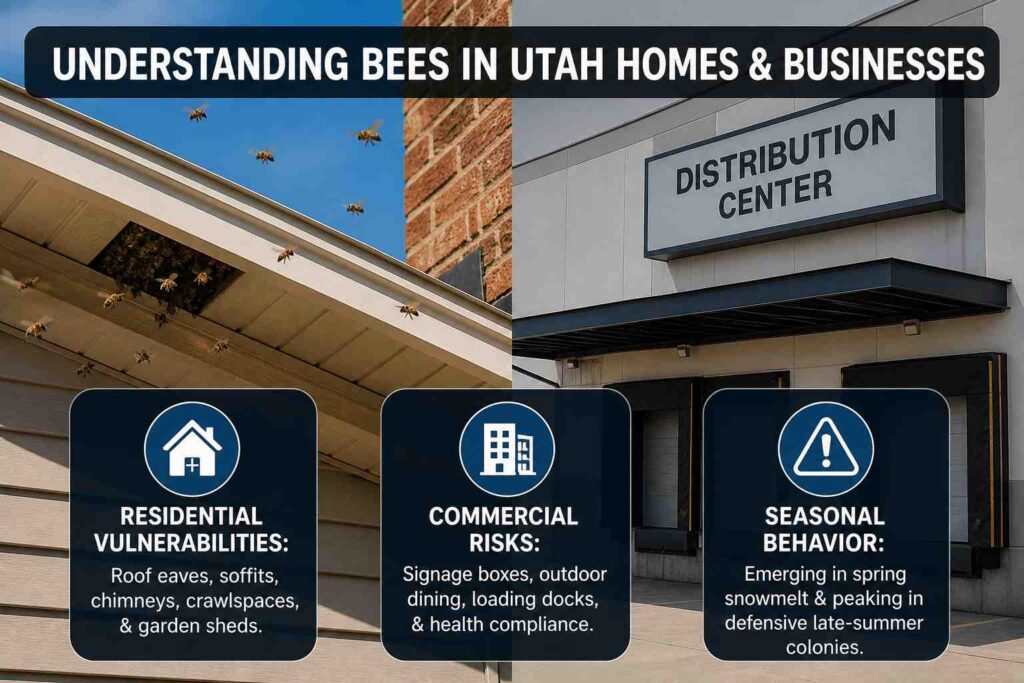
Utah’s sharp seasonal transitions significantly impact insect behavior. As the snow melts down from the mountains, overwintering queens emerge to establish new colonies. In late summer, those colonies peak in size, making resource competition fierce and workers much more defensive.
| Target Area | Residential Properties | Commercial Facilities |
| Common Vulnerabilities | Roof eaves, soffits, basement crawl spaces, chimney voids, hollow trees, and garden sheds. | Warehouses, outdoor dining areas, loading docks, utility housing, and signage boxes. |
| Primary Risks | Health threats from painful stings, severe allergic reactions, and internal moisture damage from melting honey. | Compliance violations, health inspector citations, loss of customer trust, and structural degradation. |
According to researchers at the Utah State University Extension, honeybees and social wasps frequently choose man-made structures because they provide ideal protection from predators and the elements. However, when these insects nest in close proximity to humans, professional intervention becomes necessary to avoid dangerous situations and property damage.
How Do You Get Rid of Bees Safely?
Removing a colony from a home or commercial building is an intricate task. When a scout bee identifies a tiny structural gap, sometimes as small as a quarter-inch, the entire swarm can move inside a wall void within hours.
Why DIY Chemical Sprays Fail
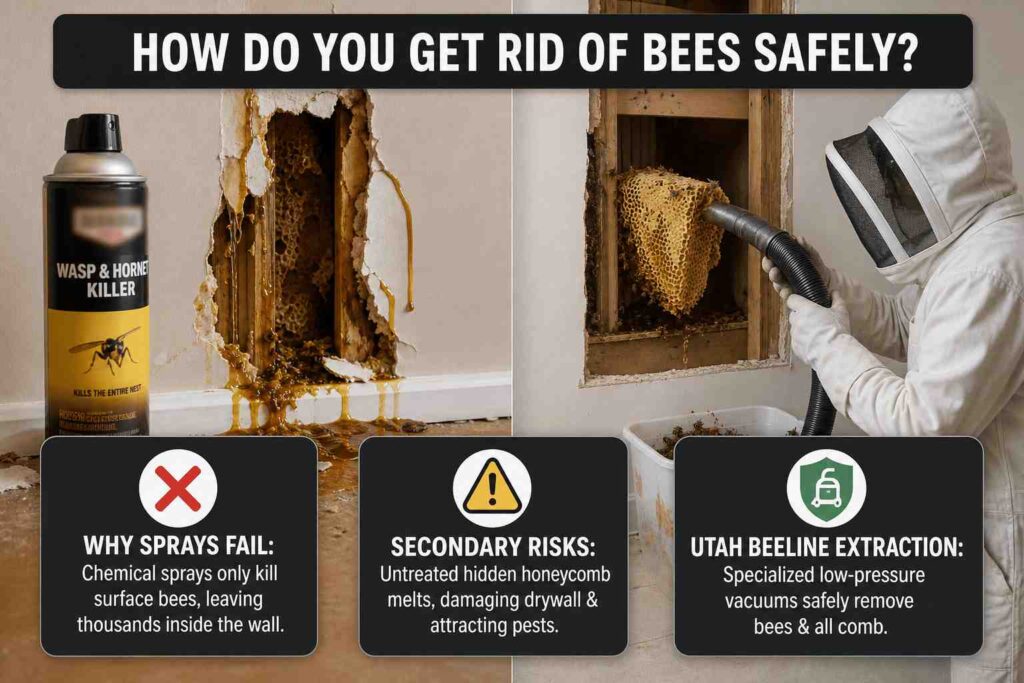
When faced with a hive inside a wall or under an eave, many property owners rely on store-bought chemical sprays. This DIY approach frequently backfires. Spraying only kills the bees near the surface, leaving thousands alive deep within the structure.
The Hidden Secondary Risks
Furthermore, an abandoned hive filled with honey, wax, and dead brood will decay over time. Without the bees fanning the comb to keep it cool, the honey melts, ruining drywall, creating foul odors, and attracting secondary pests like carpet beetles, ants, and mice.
The Utah Beeline Solution
The team at Utah Beeline approaches bee issues with a clear, systematic strategy. Our licensed technicians locate the precise boundaries of the hive, safely extract the living colony using specialized, low-pressure vacuums, and meticulously remove every ounce of comb and honey.
Related Topics Property Owners Often Ask About
As you look into managing your property’s exterior, it helps to understand how stinging insect control fits into a broader, comprehensive pest defense framework.
The Value of Quarterly Pest Management
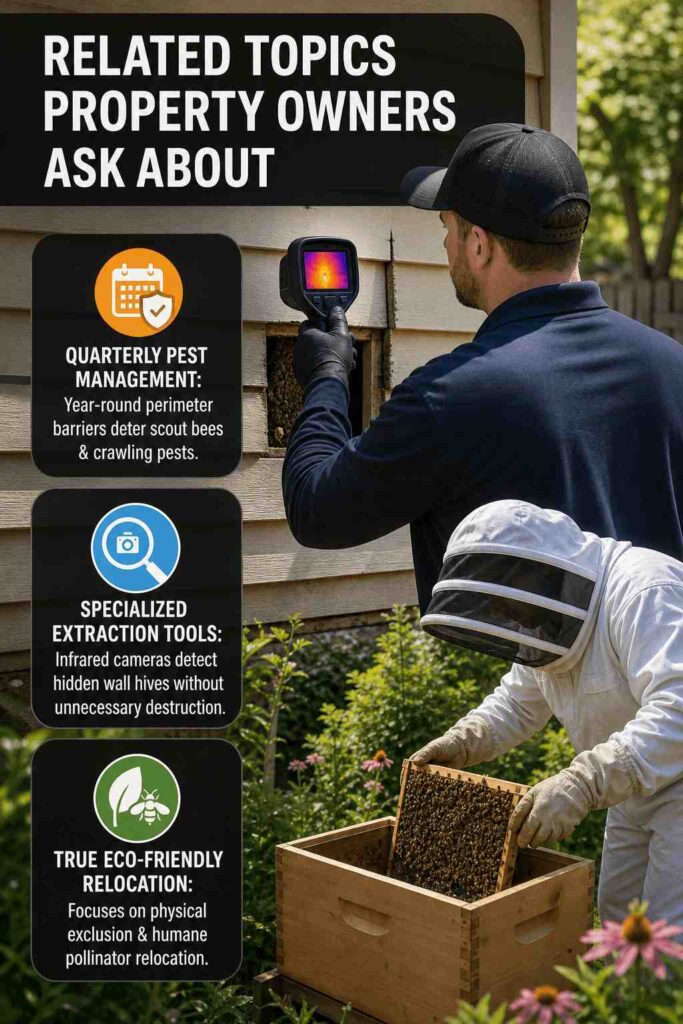
Pests do not operate on a one-time schedule. While a focused service handles an immediate bee colony, investing in consistent Quarterly Pest Management keeps your property’s perimeter secure all year long. Regular treatments establish a continuous barrier that deters new scout bees, spiders, and crawling insects from establishing nests in the first place.
General Pest Control vs. Specialized Extractions
General pest management relies on routine inspections and perimeter treatments targeting common invaders like ants and crickets. In contrast, bee removal is a highly specialized craft. It requires distinct protective equipment, infrared cameras to view inside walls, and construction knowledge to access and seal hidden cavities safely.
Implementing True Eco-Friendly Pest Control
Modern property owners want effective solutions that do not harm the local environment. By applying Eco-Friendly pest control principles, professional technicians focus on physical exclusion and biological understanding. Rather than relying on non-selective chemicals, the goal is to carefully relocate beneficial pollinators while keeping families and ecosystems safer.
DIY vs. Expert Protection with Utah Beeline
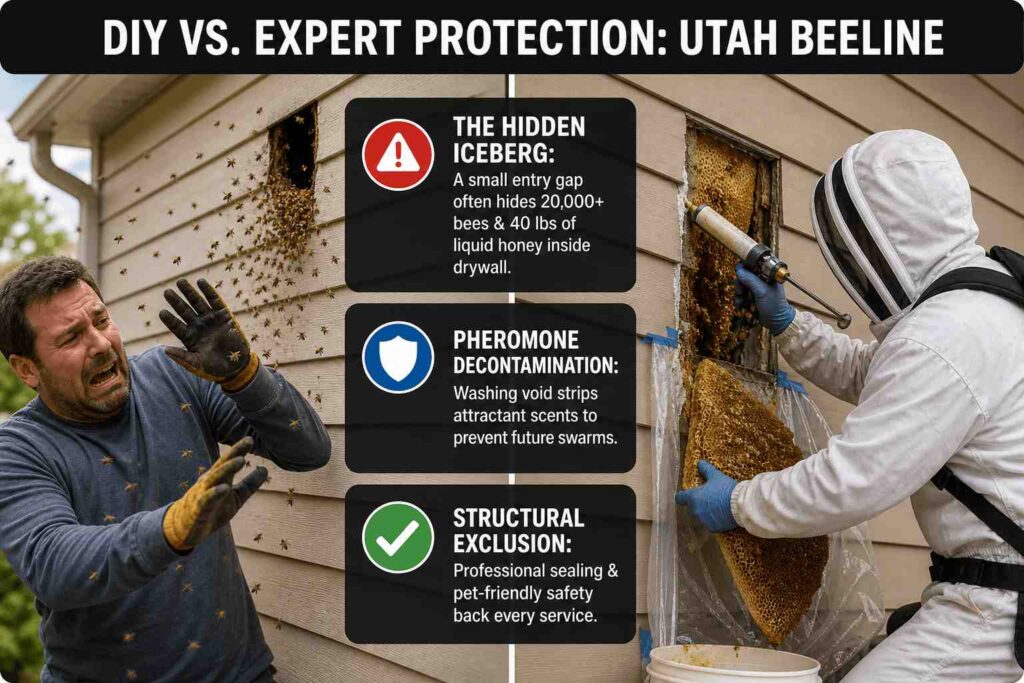
Attempting a live bee extraction without proper training or equipment is a high-risk gamble. Without professional gear, you expose yourself, your neighbors, and your pets to severe stinging incidents.
“A honeybee hive inside a wall is like an iceberg,” says a licensed Utah Beeline service technician. “You might only see a few dozen bees entering a gap, but behind that drywall sits a colony of twenty thousand insects and forty pounds of liquid honey. Removing it safely takes patience, specialized tools, and structural expertise.”
When you trust an expert, you get complete peace of mind. Professionals understand the entry habits of bees across Salt Lake City, Ogden, and Provo. They apply safer, pet-friendly pest control methods, thoroughly clean the void to strip away attractive pheromones, and back their work with structural exclusion that stops future swarms from returning.
Utah Beeline Property Protection Plans
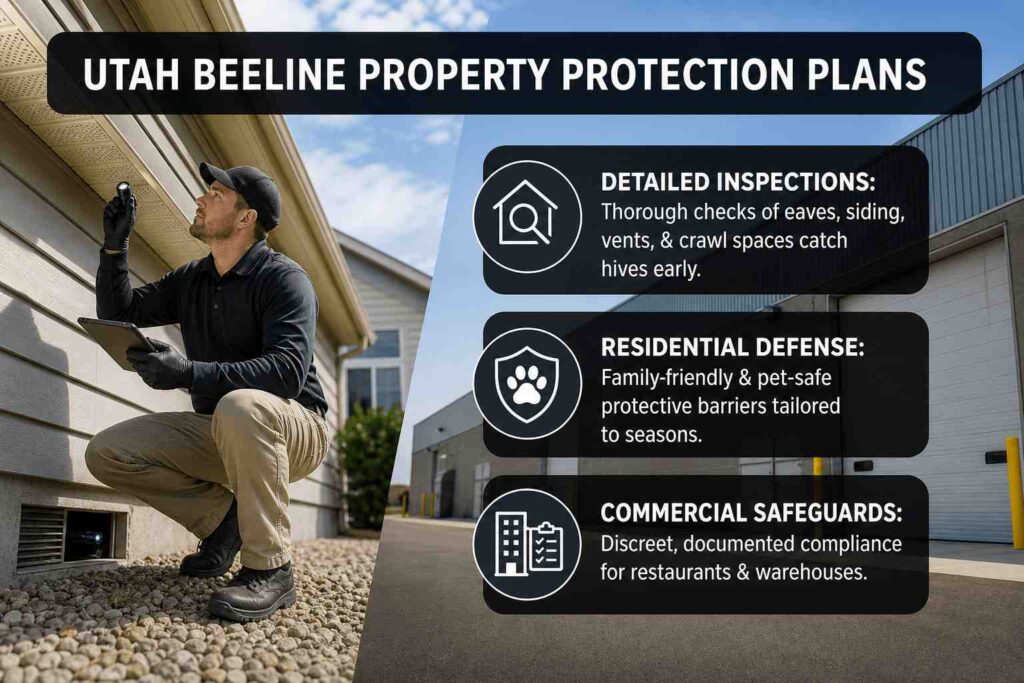
Utah Beeline provides tailored service structures designed to fit the specific needs of residential homes and commercial operations across Utah.
- Detailed Property Inspections: Our team checks your structure’s eaves, siding, vents, and crawl spaces to catch developing hives early before they turn into expensive structural headaches.
- Residential Defense Programs: We build a protective shield around your home using pet-safe, family-friendly methods, adjusting our defensive barriers to match changing seasonal pest pressures.
- Commercial and Industrial Safeguards: We provide discreet, fully documented pest management for restaurants, warehouses, and corporate facilities, keeping your operations fully compliant with all local health regulations.
Safety and Compliance Assurance for All Properties
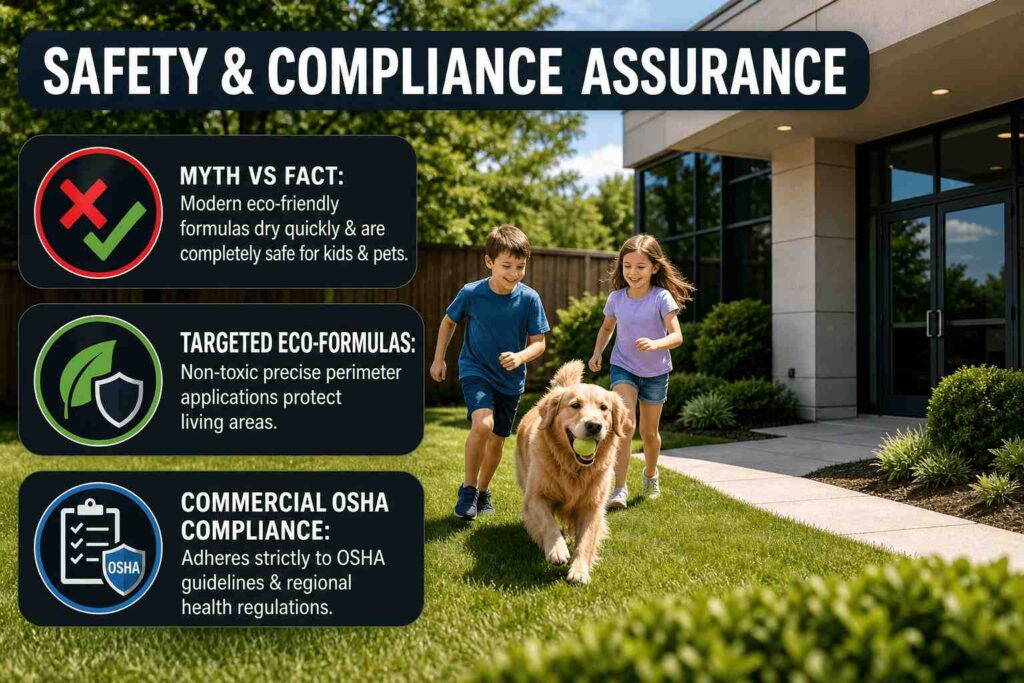
Myth: Professional pest treatments are always toxic to household pets and children.
Fact: Modern professional treatments utilize highly targeted, eco-friendly formulas that are completely dry and safer for children and pets shortly after precise application.
For commercial clients, our strategies strictly adhere to OSHA guidelines and local health codes, ensuring your workspace remains safer for employees and clients alike.
Proactive Tips for a Pest-Free Environment
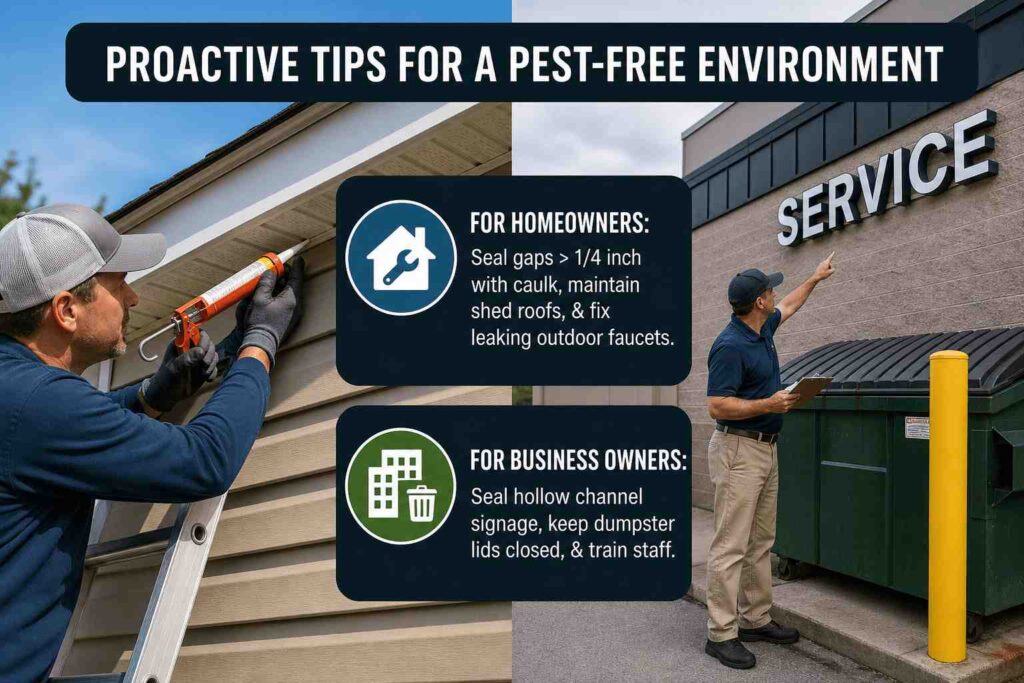
While professional treatments form your core defense, maintaining your property’s exterior helps prevent scout bees from targeting your structure.
For Residential Homeowners
- Seal Structural Gaps: Check your fascia boards, soffits, and brick mortar yearly; use silicone caulk or expanding foam to seal openings larger than a quarter-inch.
- Maintain Outbuildings: Keep shed doors tightly shut and check under the roofs of playhouses and dog houses early in the spring.
- Manage Standing Water: Bees need water to cool their hives. Keep birdbaths clean, fix leaking outdoor faucets, and ensure your gutters drain properly.
Tip: Inspect window screens and door seals before the first frost to prevent winter rodent entry.
For Commercial Business Owners
- Inspect Commercial Signage: Hollow channel letters on building signs are prime real estate for nesting bees. Ensure these fixtures are well-sealed.
- Monitor Waste Disposal Areas: Keep dumpster lids closed tightly and wash down trash pads regularly to remove sweet residues that attract foraging insects.
- Train Outdoor Staff: Ensure landscaping and facility teams know how to spot early stinging insect activity along walkways and main entrances so it can be handled before it impacts clients.
Conclusion: Invest in True Peace of Mind
Managing an active bee infestation on your own can quickly result in costly property damage or painful injuries. Partnering with a skilled, local pest expert ensures that your property remains safer, clear, and comfortable throughout every season of the year.
Don’t let pests take over. Call us today for expert pest control!
Utah’s Favorite Pest Control Company
- Serving Utah Since 1997
- Locally owned and operated
- Top-rated with 2,300+ five-star reviews!
- Safer pest control treatment for kids and pets
To find out more about our residential pest control services and commercial pest control services, click the links or visit our Contact Us page and fill out our form or call us at (801) 544-9200.
Frequently Asked Questions
How do you get rid of bees?
Getting rid of bees requires identifying the specific species, locating the hidden boundaries of the hive, and physically extracting the insects along with their honeycombs. Utah Beeline utilizes specialized equipment to safely remove the entire colony and clear out the nesting materials so secondary pests are not attracted to the area.
When should you call a bee removal service?
You should call a professional bee removal service as soon as you notice a persistent flight path of bees entering a structural opening or see a physical hive developing on your property. Acting quickly prevents the colony from building a massive honeycomb network inside your walls, saving you from expensive structural repairs later.
How do professionals remove bees?
Professionals use specialized protective gear, gentle smoking techniques to calm the colony, and specialized low-pressure vacuums to safely capture the living insects. The team at Utah Beeline then carefully cuts away and removes the wax comb and honey stores, washing the internal cavity to remove lingering pheromones.
Is bee removal safer?
Yes, when handled by the trained specialists at Utah Beeline, bee removal is entirely safer for your structure, your family, and your pets. Our technicians use precise containment tools and structural extraction methods that keep the insects from swarming defensively across your neighborhood.
Can bees return after removal?
Bees can return to the exact same spot if the original entry hole is left unsealed or if the scent of the previous hive’s wax and pheromones remains inside the wall void. Utah Beeline prevents this by completely sanitizing the empty space and advising you on how to seal structural gaps to block future scouts.
How long does bee removal take?
A standard structural bee removal process generally takes between two and five hours, depending on the hive’s size and its location. Highly complex extractions located deep inside brick facades, multi-story commercial eaves, or chimneys may require additional time to ensure a clean, complete removal.
Do bee removal companies relocate bees?
Whenever a professional team deals with beneficial honeybees, the priority is to execute a live extraction and relocate the colony to a local apiary or beekeeper. Utah Beeline supports eco-friendly initiatives, ensuring these valuable pollinators are moved to a safer location whenever it is structurally feasible.
What is the difference between bee removal and extermination?
Bee removal focuses on physically extracting the live colony and removing all physical combs from the structure, often allowing for live relocation to a safe habitat. Traditional extermination utilizes targeted chemical applications to destroy a pest population, a method generally reserved for aggressive, non-beneficial stinging pests like hornets and yellowjackets.
Next: The Truth About Vinegar and Ant Control: A Utah Property Owner’s Guide