
Key Takeaways
- Quarterly pest control describes a treatment interval, roughly every 90 days, not a fully automatic subscription that runs itself in the background.
- Knowing who is responsible for booking each visit, you or the company, is the single most important detail, and it’s the one most companies gloss over.
- A missed or skipped visit doesn’t have to mean a missed season of coverage, as long as you know what to do about it.
- A few minutes of prep before each visit makes the treatment itself more effective.
Introduction
Quarterly pest control sounds simple enough. Sign up once, and a technician just shows up every few months after that, right? Not quite. Most recurring home services, pest control included, do not run themselves quietly in the background the way that sounds. Lawn care works this way. So does your HVAC tune-up. The gap between what a quarterly plan implies and what actually happens is exactly where good customers end up frustrated through no fault of their own.
This article answers the real question: how quarterly pest control works once you have signed up, not just what the plan name implies. We will walk through what quarterly means as a treatment interval, who is responsible for getting each visit on the calendar, how you will know one is coming up, what to do when the timing does not work, and what happens if a visit slips through the cracks entirely. By the end, you will know how a quarterly plan with Beeline Pest Control really runs in Utah, not just what the name implies.
How Often Does Quarterly Pest Control Come
A quarterly pest control plan treats your home roughly every 90 days, about four times a year, timed to get ahead of seasonal pest activity instead of reacting to it after the fact. That answers a common question on its own: how often does pest control come on a quarterly plan? Four visits, spread evenly across the year, rather than one lump treatment. That is different from a one-time treatment, which handles a specific problem once and stops there, and different from the monthly plans some companies sell, which trade a shorter interval for a higher price tag.
The 90-day rhythm is not arbitrary. Utah’s pest pressure moves with the seasons: spiders and ants ramp up as it warms, wasps peak in late summer, and boxelder bugs and rodents start moving toward structures as it cools. This proactive rhythm lines up with what the EPA calls integrated pest management, treating a property on a schedule to prevent problems rather than waiting to react once they are already inside. Once you see the pattern, the schedule stops feeling arbitrary and starts feeling like the point.

Who Schedules Each Visit, You or Beeline
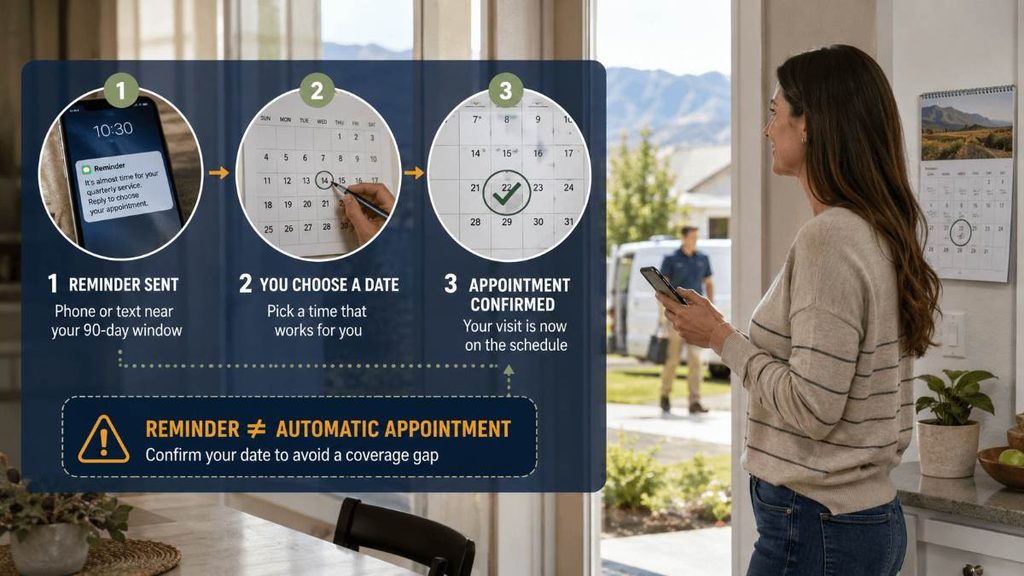
This is the part vague plan descriptions tend to skip, and it matters more than almost anything else in this article. Once you are enrolled, we send a reminder as your next treatment window approaches, but the visit itself only lands on the schedule once you confirm a date with us. It is not a subscription running quietly in the background, and we would rather say that plainly now than let anyone assume otherwise and end up with a coverage gap later.
In practice, it is a quick step. A reminder goes out by phone or text as your 90-day window opens; you pick a time that works, and that is the appointment set. Think of it like confirming a dentist appointment, a short exchange rather than something you have to chase down on your own.
What If the Timing Does Not Work for You
Life does not always line up with a treatment window. If the date we first offer does not fit your week, call or text us and we will move it. There is no penalty for rescheduling, and pushing a visit by a week or two to fit your calendar does not affect your coverage, as long as it still happens within a reasonable stretch of the original window.
What Happens If You Miss a Quarterly Visit
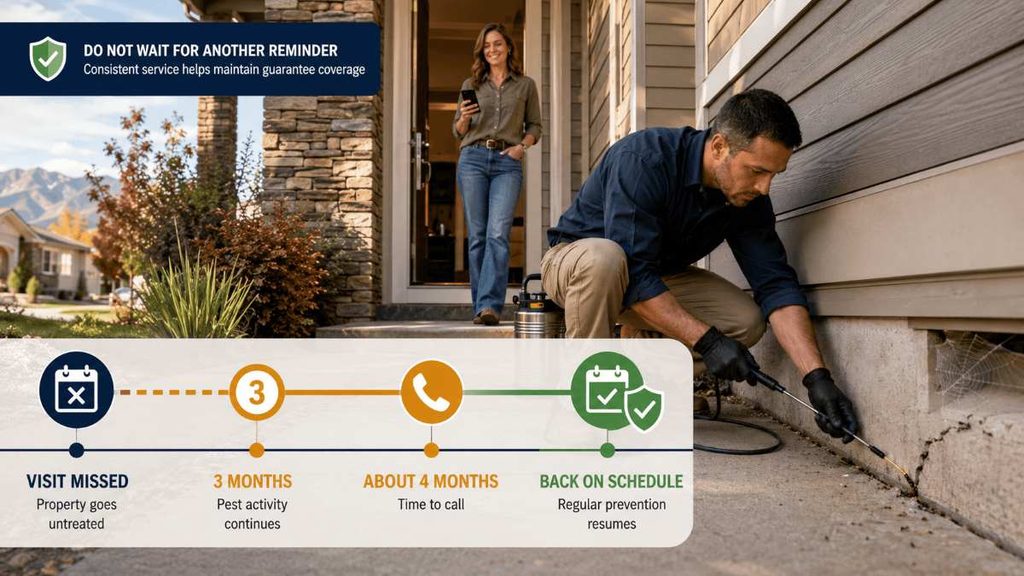
Here is a scenario that comes up more often than you would think. A reminder arrives during a busy week and slips through the cracks, or a visit gets pushed back once and then forgotten. Three months later, nobody has called to rebook, and the property has quietly gone untreated the whole time. The National Pest Management Association points to consistent, scheduled treatment as what makes a prevention-based pest control program actually work, and this is exactly why a missed visit matters more than it might seem at first. The pest activity your plan was meant to catch does not pause and wait for the next reminder.
The fix is simple, even if it has been a while. If it has been longer than about four months since your last visit, treat that as your cue to call rather than waiting on the next one. One phone call gets you back on schedule, and if you have gone several cycles without a visit, we will help you sort out where things stand rather than leaving you to guess. Staying on schedule is also part of what keeps your service guarantee active, which we cover in full in our separate article on how our guarantee works.
What Is Included in a Quarterly Visit
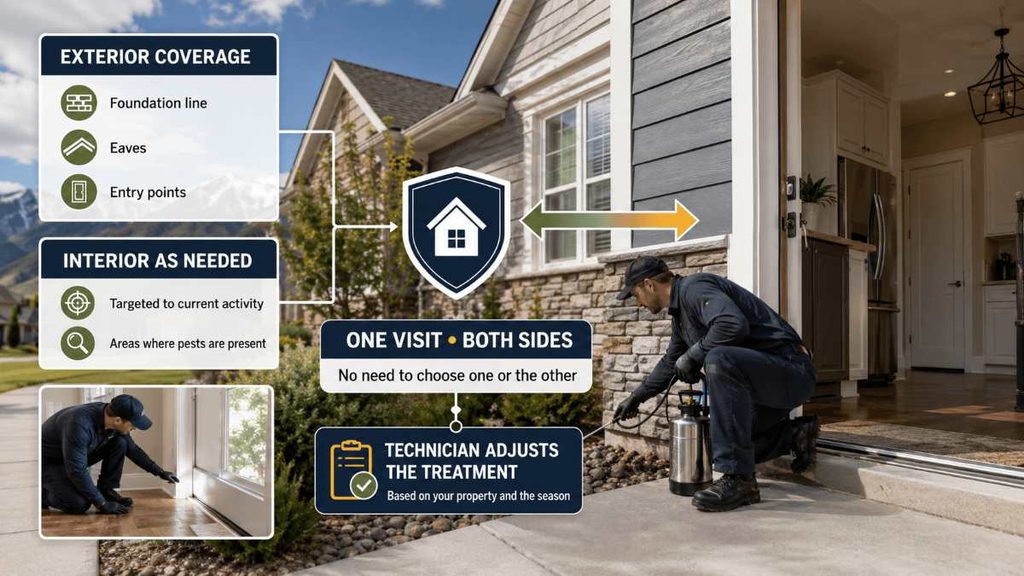
Each visit covers two sides of the same treatment. Exterior treatment addresses the foundation line, eaves, and entry points where pests get in. Interior treatment is applied as needed, based on what is actually going on inside. You do not have to pick one or the other or keep track of which type is due next. A licensed technician scopes each visit to whatever combination your property needs at that point in the season.
That combination is also part of what makes quarterly service worth the flexibility built around it.
Can You Pause or Cancel a Quarterly Plan
Our quarterly service does not require a long-term contract, so there is no early termination fee waiting if your situation changes, whether that is a move, a tighter budget, or deciding one-time service fits your needs better. That is a real point of difference, not just a policy footnote. Several larger national pest control companies require a signed annual agreement before they will even set up quarterly service, with a cancellation fee if you leave early. Beeline does not work that way. If you need to pause for a season, say so when a reminder comes in rather than letting a visit quietly lapse. It takes one short conversation instead of leaving a coverage gap you did not plan for.
Quarterly Versus One Time: The Practical Difference
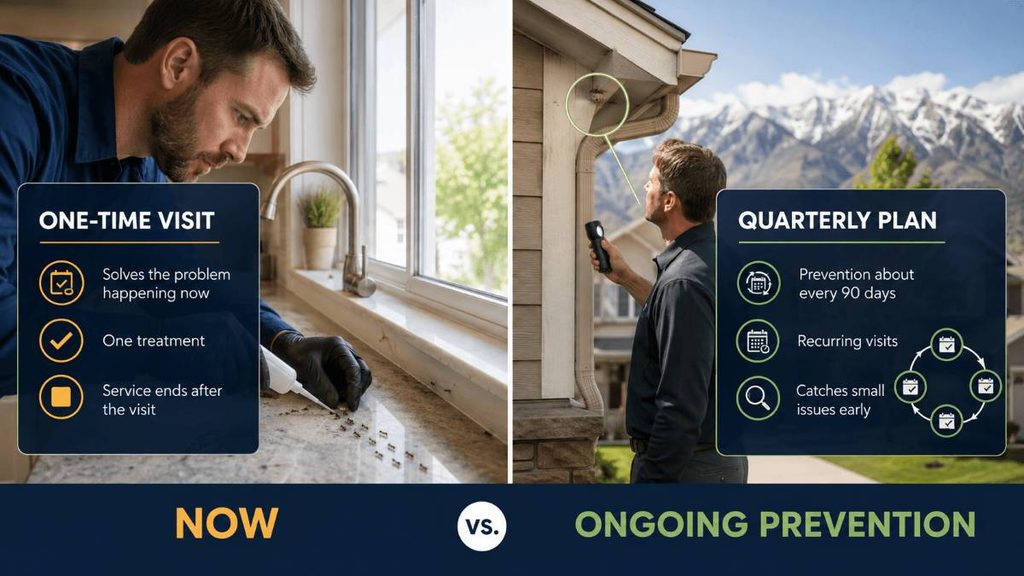
Guarantee terms work a little differently between the two, and we cover that fully in our guarantee article, so we will not repeat it here. Day to day, the real difference comes down to who initiates treatment. A one-time visit handles what you are dealing with right now and ends there. A quarterly plan keeps you on a recurring 90-day rhythm, so smaller issues, which are a few ants near a windowsill or a wasp starting a nest under the eave, get caught before they turn into something bigger between visits.
Getting Ready Before the Technician Arrives
A little prep makes the visit more effective. Unlock gates and clear a path around the exterior perimeter, especially near the foundation and any known problem spots. Keep pets inside or secured while the technician is there. If something specific has been bothering you since the last treatment, such as a corner with more ants than usual, a spot where wasps keep circling, mention it when you confirm the appointment so the technician knows exactly where to focus.
Conclusion
A quarterly plan is a simple idea with one detail that trips people up. We will always give you a heads up before your next visit, but the appointment only becomes real once you say yes to a date. Once you know that, everything else falls into place. If life gets in the way, a quick call or text keeps things on track, and if you are ever unsure when your next visit is due, that is always worth a call rather than a guess. Pests do not check anyone’s calendar before they move in, and your pest control schedule should not be a mystery either.
Ready to get on a schedule that actually works for your home? Request a free quote from Beeline Pest Control, or reach out by phone or text if you are already a customer and want to confirm your next visit.ou commit to anything. Bugs do not wait for a convenient time to show up, so you shouldn’t have to wait for a straight answer about what happens when they do.
Frequently Asked Questions
Does my quarterly visit happen on the same day every time?
Not line-for-line the exact same day, but roughly the same window, about every 90 days. The specific date shifts slightly based on your schedule and ours, which is why a reminder goes out ahead of each one rather than relying on a fixed recurring date.
What if no one is home when the technician arrives?
Most exterior treatment does not require anyone home at all. If interior treatment is part of that visit, we will work with you to find a time that fits, since that portion does need access inside.
Does the quarterly plan auto-renew every year?
The plan continues on its 90-day rhythm without a separate annual renewal or contract to re-sign. Since there is no long-term agreement, you can also step away at any point without a renewal penalty.
Can one account cover more than one property?
Yes, and this comes up often for rental property owners. Each property gets scheduled and treated separately, so reach out, and we will set up the right cadence for each address, whether it is residential or commercial.
Does the price change from visit to visit?
Pricing is set when you sign up based on your property and does not change from visit to visit for the same service. If your needs change significantly, like adding a new pest concern, that becomes a separate conversation.
What happens to my schedule if I move mid plan?
Let us know your move date as soon as you have it. We can usually set up service at your new address if it falls within our service area, and if it does not, we will let you know right away and close out your account with no penalty, since there is no long-term contract involved.
How far in advance does the reminder go out?
Typically, as your 90-day window opens, giving you enough time to pick a date without the reminder arriving so early that it is easy to forget again by the time the visit is due.
Is quarterly service better than monthly service?
For most Utah homes, quarterly lines up well with how pest activity actually shifts by season, and it is the right starting point for most properties. Monthly tends to make more sense only when there is an active, ongoing infestation that needs closer monitoring, which is worth discussing directly with your technician.
What if I want to switch from quarterly to one-time service, or the other way around?
Just ask. Since neither option locks you into a contract, moving between them is a matter of updating your account rather than cancelling and starting over.
Who do I contact if I think I missed a visit?
Call or text us directly rather than waiting for the next scheduled reminder. If it has been more than about four months since your last treatment, it is worth checking in regardless of what the calendar says.
Next: How Much Does Pest Control Cost in Utah? A 2026 Pricing Guide