
[Key Points Section Added Below]
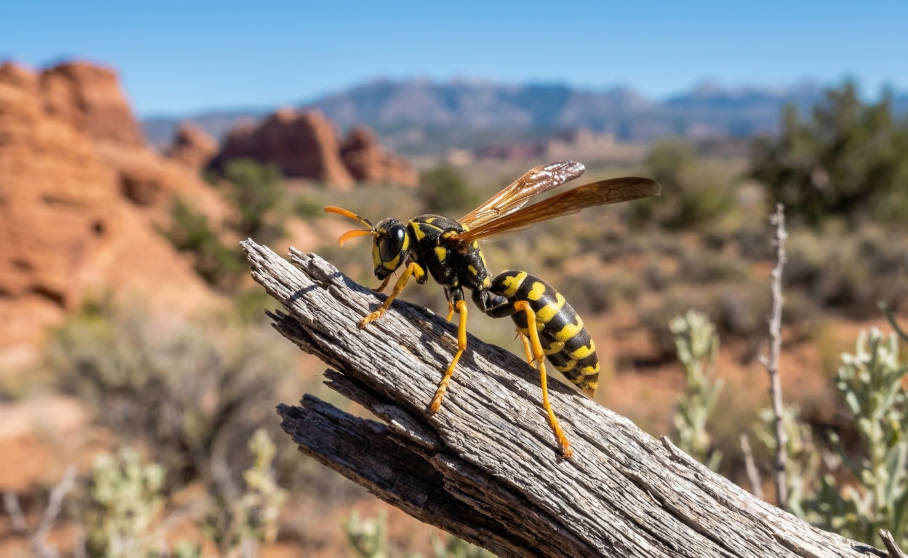
- The Utah Sting Risk: Unlike worker honeybees, wasps have smooth stingers, allowing them to sting repeatedly without dying.
- The Alarm Signal: Crushing a wasp releases a volatile pheromone that signals the rest of the colony to launch a defensive attack.
- Seasonal Surges: Wasp aggression peaks in late summer as natural food sources dwindle and colony populations explode.
- The Professional Edge: Utah Beeline uses specialized enzymatic neutralizers to erase pheromone trails that DIY cleaners miss.
- Year-Round Defense: Quarterly maintenance is the gold standard for keeping Utah eaves, soffits, and commercial entryways pest-free.
Introduction: Navigating Utah’s “High-Buzz” Seasons
Whether you are hosting a summer social in Provo or managing a high-traffic outdoor patio in Salt Lake City, the sharp, rhythmic buzz of a wasp is an immediate mood-killer. In the Beehive State, our local climate creates a unique “cycle of invasion.” As the mountain snow melts, queens emerge to scout for nesting sites; as the August heat intensifies, those small nests become thriving, territorial colonies.
Protecting your family, pets, and business reputation requires more than a can of hardware-store spray. It demands the specialized knowledge of Pest Control Utah experts who understand the biology behind the bite. At Utah Beeline, we don’t just “spray bugs”—we provide a sophisticated barrier of protection that respects your property and the local environment.
Decoding the Pest Pressure on Utah Properties
Utah’s distinct four seasons dictate the behavior of our local pests. Our climate drives a “seasonal shift” where pests move from the outdoors directly into your structural vulnerabilities.
Utah’s Most Wanted: Seasonal Invaders
- Wasps & Hornets: Territorial nesters that favor eaves, soffits, and playground equipment.
- Boxelder Bugs: Sun-seekers that cluster on Utah’s siding before invading interiors. Boxelder Bug Removal Utah is a top priority for south-facing homes.
- Rodents: Mice and voles seeking thermal refuge in crawl spaces and winterized sheds.
- Spiders: Including the medically significant Black Widow, which thrives in Utah’s rock walls and basements.
While a homeowner worries about a sting during a backyard BBQ, a business owner faces a different threat. For commercial properties, a wasp infestation can lead to negative reviews, health code violations, and safety liabilities. This is why Commercial Pest Control Salt Lake City is essential for maintaining a professional, safe environment.
Are Wasps Harmful? Understanding the Biological Threat
When clients ask us, “Are wasps harmful?” we look at the biology. Unlike worker honeybees—which have barbed stingers and typically die after stinging a mammal—wasps are built for repeat defense.
The Dynamics of an Attack
- Multiple Stings: A wasp’s stinger is smooth, like a needle. This allows them to pump venom into a target multiple times in rapid succession.
- Wasp Venom Effects: According to the Mayo Clinic, most people experience localized burning and swelling. While the initial “fire” fades in about an hour, the physiological reaction can peak 48 hours later.
- The “Chemical SOS”: This is the most dangerous aspect of wasp behavior. When a wasp is threatened or crushed, it releases alarm pheromones. This chemical “shout” can draw nest-mates from dozens of feet away to join the fight.
💡 Avoid the “Crush” Reflex. If you swat and kill a wasp near its nest, you are essentially “tagging” yourself with a chemical marker that signals the rest of the colony to attack.
The Professional Solution
The complexity of wasp behavior is why DIY efforts often backfire. Homeowners who spray a nest frequently miss the “scout” wasps or fail to neutralize the pheromones. Utah Beeline uses professional-grade enzymatic neutralizers to erase these chemical trails, ensuring that even after the nest is gone, other wasps aren’t drawn back to the same spot.
The Advantage of Quarterly Management
Utah property owners often ask: “Do I really need year-round service?” The answer lies in the persistent nature of Utah pests.
Specialized Defense vs. General Spraying
A one-time treatment handles the “now,” but Quarterly Pest Management handles the “next.”
- Spring: We neutralize emerging queens before they can establish 500-member colonies.
- Summer: We reinforce barriers against spiders and ants active in the heat.
- Fall/Winter: We transition to Rodent Control Utah and Spider Extermination Services as pests move indoors for warmth.
Eco-Friendly Innovation
We believe in Eco-Friendly Pest Control. Our Integrated Pest Management (IPM) approach focuses on sealing entry points—like gaps in soffits or utility line penetrations—and using low-impact, high-efficacy products that are safer for children and pets.
DIY Risks vs. The Beeline Guarantee
“Many people don’t realize that wasps can recognize landmarks and even individual nest-mates. When you disturb a nest without the proper gear and neutralizers, you’re often just making the problem more aggressive for the next person who walks by.” — Utah Beeline Senior Technician
- Safety & Equipment: We utilize specialized “reach” equipment and protective suits to handle aggressive Yellowjackets safely.
- Local Expertise: From Ogden to Provo, we know exactly where Utah pests hide—from basement window wells to the peaks of vaulted ceilings.
- Guaranteed Peace of Mind: If the pests return between our scheduled quarterly visits, we do too—at no extra cost to you.
Utah Beeline Property Protection Plans
We offer customized solutions for every property type:
- The Quarterly Guard: Our premier residential plan. It provides a 365-day shield against Utah’s most common pests.
- Commercial Defense: Focused Commercial Pest Control Salt Lake City for warehouses, restaurants, and office complexes. We ensure your business stays compliant and your reputation stays intact.
- Free Inspections: Our experts will walk your property, identify “hot zones,” and provide a clear, no-pressure plan of action.
Safety, Compliance, and Trust
Is professional treatment safe? At Utah Beeline, “safe” isn’t just a buzzword. We strictly adhere to EPA guidelines and use products designed to target pest biology, not your family or customers.
The Beeline Difference
- Licensed & Insured: Every technician is a highly trained professional.
- Enzymatic Neutralizers: We go beyond “killing bugs” by erasing the chemical signals that lead to re-infestation.
- Family-First Formulas: Treatments designed with your kids and pets in mind.
Proactive Tips for a Wasp-Free Environment
For the Home:
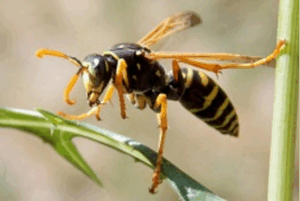
- Soffit Inspection: Seal small gaps where Paper Wasps love to start “umbrella” nests.
- Water Management: Fix dripping outdoor faucets; wasps are frequently drawn to standing water in the Utah summer.
- Food Security: Keep outdoor trash bins tightly sealed, especially during late-summer “sugar-seeking” phases.
For the Business:
- Entryway Maintenance: Regularly sweep eaves and entry alcoves.
- Sanitation: Ensure outdoor grease traps and dumpsters are cleaned frequently to remove protein attractants.
- Landscaping: Keep trees and shrubs trimmed at least one foot away from the building to eliminate “pest bridges.”
Conclusion: Local Expertise You Can Trust
Since 1997, Utah Beeline has been the shield protecting Utah properties from the unique challenges of our high-desert climate. Don’t wait for a sting to realize you have a problem. Invest in the professional protection your property deserves.
Utah’s Favorite Pest Control Company
- Serving Utah Since 1997
- Locally owned and operated
- Top rated with 2,300+ five-star reviews!
- Safer pest control treatment for kids and pets
Don’t let pests take over—Call us today for expert pest control! To find out more about our residential pest control services and commercial pest control services, click the links or visit our Contact Us page and fill out our form or call us at (801) 544-9200.
Frequently Asked Questions
Are wasps harmful?
Can a wasp recognize you?
Scientific research published in Oxford Academic indicates that Paper Wasps can recognize individual faces within their colony. While they may not "remember" every human they see, they are extremely sensitive to repeated disturbances and will aggressively defend their territory against perceived threats.