
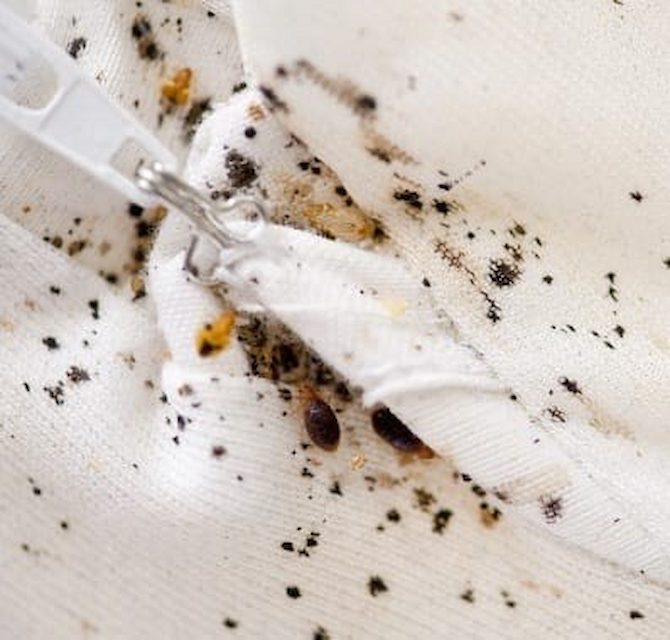
Key Takeaways
- The Temperature Myth: While extreme cold can theoretically kill bed bugs, standard Utah winter weather inside a heated home or business has absolutely no effect on them.
- Indoor Havens: Bed bugs thrive year-round by nesting deep within micro-environments like baseboards, mattresses, and structural voids where temperatures remain stable.
- Proactive Defense: Waiting for a seasonal freeze to solve an infestation gives colonies time to multiply exponentially, increasing property damage.
- The Professional Standard: Eliminating cryptic insects requires a customized, safety-focused treatment protocol that targets the root nesting zones.
Why Winter Won’t Freeze Out Utah’s Toughest Pests
When the heavy snow starts falling across the Wasatch Front and temperatures drop well below freezing, many local property owners assume that nature is handling their pest problems for them. It is a comforting thought: as winter sets in, wasps disappear, boxelder bugs retreat, and outdoor insects go dormant. However, when it comes to cryptic, indoor hitchhikers like bed bugs, relying on the winter chill to clear an infestation is a costly mistake.
Whether you are trying to safeguard a residential home in Ogden or protecting a commercial food storage facility in Salt Lake City, understanding indoor pest survival is critical. Bed bugs do not hibernate outdoors; they hitchhike directly into temperature-controlled buildings where they find a steady food supply and ideal breeding conditions. To keep your property safe, relying on experienced Pest Control Utah professionals is the most effective way to eliminate these resilient invaders before they spread.
Understanding the Pests in Utah Homes and Businesses
Utah’s distinct four-season climate dramatically influences how pests interact with human structures. During the autumn transition, local pests face a biological ultimatum: find warmth or perish. This driving need sends a wave of pests toward our foundations, doors, and rooflines.
For homeowners, this seasonal migration introduces direct health and structural risks. Aggressive Black Widow spiders slip into dark basement corners, while mice and voles chew through utility line insulation to build nests inside warm crawl spaces. According to seasonal tracking data from the Utah State University Extension, these cold-weather invaders create immediate hazards by contaminating food prep areas and destroying building materials.
For business owners, the threat translates directly to financial liability and reputation damage. A single pest sighting in a commercial facility or hotel along the Wasatch Front can instantly compromise regulatory compliance, trigger negative online reviews, and lead to sudden revenue loss.
Callout: The Commercial Reality
While a residential homeowner worries primarily about personal comfort and family safety, a commercial business operates under strict corporate and health department mandates. Warehousing, retail, and hospitality spaces require documented perimeter protection to shield their brand equity.
How Winter Weather (Doesn’t) Affect Bed Bugs
The core question many property owners ask when the temperature drops is whether cold weather stops bed bugs in their tracks. The simple answer is no. While it is true that exposing bed bugs to sustained, sub-zero temperatures can eventually kill them, the interior spaces of our buildings are kept at a comfortable 70°F – creating a perfect year-round sanctuary for reproduction.
Instead of dying off, bed bug colonies simply continue their lifecycle indoors. The immediate risk of ignoring an infestation during the winter is that a small, localized issue can rapidly bloom into a massive, multi-room crisis. Trying to handle this problem using over-the-counter DIY foggers or retail sprays typically ends in failure. These consumer products are highly repellent but offer very little residual control. When applied, they trigger a defensive reaction known as “chemical flushing” – panicking the insects and driving them deeper into wall voids, electrical boxes, and adjacent rooms.
This structural complexity is why specialized intervention from Utah Beeline is so important. Rather than relying on a generic surface spray, our licensed technicians locate the precise structural entry pathways and harboring hubs. By utilizing targeted, safety-focused application methods that strictly follow Environmental Protection Agency (EPA) guidelines, we clear out the hidden heart of the colony while ensuring your indoor environment remains completely safe.
Related Topics Property Owners Often Ask About
When planning an effective property defense strategy, it helps to understand the underlying mechanics of modern pest management.
One-Time Treatments vs. Quarterly Pest Management
A one-time emergency treatment functions much like a temporary patch. It knocks down the active pests currently crawling across your floor, but it does nothing to stop hidden egg clutches from hatching a few weeks later, nor does it prevent new invaders from migrating across your property lines.
Long-term security depends on consistent Quarterly Pest Management. A continuous, scheduled barrier dynamically adapts to changing seasonal life cycles, ensuring your home’s foundation thresholds, eaves, and soffits remain sealed against shifting outdoor pressures.
The Mechanics of Eco-Friendly and Pet-Friendly Solutions
Modern pest control should never force you to compromise the safety of your family or customers. Advanced eco-friendly pest control utilizes low-toxicity botanical derivatives and highly targeted residual barriers. These innovative formulas are structurally engineered to disrupt the specific biology of target insects – like ants, spiders, and beetles – without leaving harsh chemical footprints behind. Once these specialized barriers dry, they establish a thoroughly pet-friendly pest control environment where curious dogs, cats, and young children can safely move about.
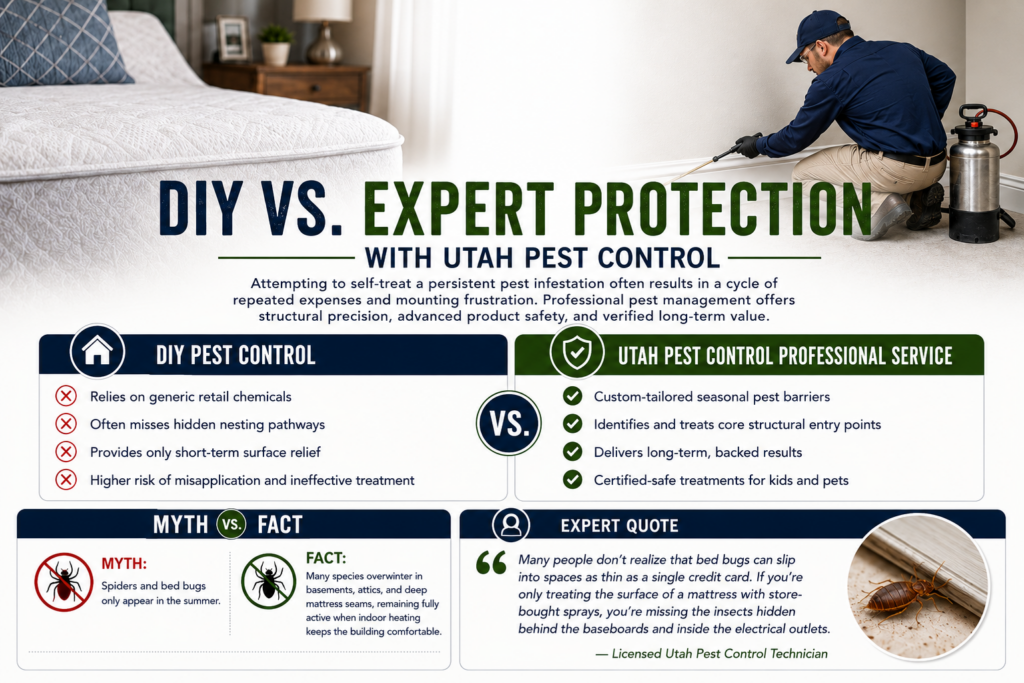
DIY vs. Expert Protection with Utah Beeline
Attempting to self-treat a persistent pest infestation often results in a cycle of repeated expenses and mounting frustration. Professional pest management offers structural precision, advanced product safety, and verified long-term value.
- DIY Pest Control
- Relies on generic retail chemicals
- Often misses hidden nesting pathways
- Provides only short-term surface relief
- Higher risk of misapplication and ineffective treatment
- Utah Beeline Professional Service
- Custom-tailored seasonal pest barriers
- Identifies and treats core structural entry points
- Delivers long-term, backed results
- Certified-safe treatments for kids and pets
Myth vs Fact:
- Myth: Spiders and bed bugs only appear in the summer.
- Fact: Many species overwinter in basements, attics, and deep mattress seams, remaining fully active when indoor heating keeps the building comfortable.
Expert Quote: “Many people don’t realize that bed bugs can slip into spaces as thin as a single credit card. If you’re only treating the surface of a mattress with store-bought sprays, you’re missing the insects hidden behind the baseboards and inside the electrical outlets.”
– Licensed Utah Beeline Technician
Utah Beeline Property Protection Plans
Utah Beeline provides clear, comprehensive service packages tailored to meet the exact operational and residential needs of properties across the Wasatch Front.
- Free Professional Inspection: The foundational step. A licensed inspector methodically checks your property’s exterior perimeter, basement joists, and interior thresholds to identify active pests and structural vulnerabilities.
- Residential Maintenance Program: The ideal solution for homeowners. This program deploys scheduled exterior treatments every three months, creating a proactive shield that stops seasonal bugs before they ever cross into your living spaces.
- Commercial Protection Plans: Custom-built blueprints designed for absolute business compliance. These plans feature detailed documentation, flexible scheduling, and intensive perimeter defense strategies tailored for restaurants, warehouses, and hospitality centers across Salt Lake City, Ogden, and Provo.
Safety and Compliance Assurance for All Properties
No. We simply ask that your pets stay in a separate room or outdoors while the formula is actively applied. Once our pet-friendly barriers are completely dry (typically within 30 to 45 minutes), your pets can return to the space with no restrictions.
Are your structural treatments safe around commercial kitchens?
Absolutely. We utilize highly regulated, target-specific treatments applied in strict accordance with EPA safety standards to keep all food-contact surfaces completely uncontaminated.
Do our pets need to leave the home during an interior application?
Safety and Compliance Assurance for All Properties
Safety Q&A: Are your treatments safe for my family, pets, or business customers?
Absolutely. At Utah Beeline, safety is our absolute priority. We utilize premium, modern products that are rigorously tested and approved for use in sensitive environments, including residential homes, schools, and commercial food establishments. Our technicians are meticulously trained to apply treatments precisely where pests travel, keeping your loved ones, pets, and patrons completely safe.
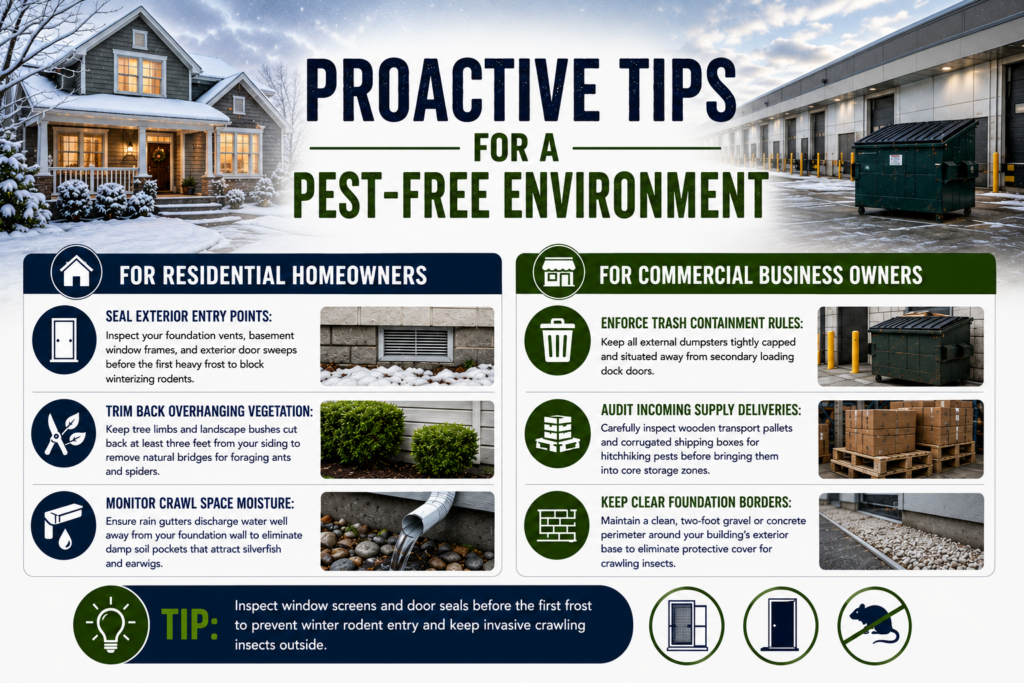
Proactive Tips for a Pest-Free Environment
For Residential Homeowners
- Seal Exterior Entry Points: Inspect your foundation vents, basement window frames, and exterior door sweeps before the first heavy frost to block winterizing rodents.
- Trim Back Overhanging Vegetation: Keep tree limbs and landscape bushes cut back at least three feet from your siding to remove natural bridges for foraging ants and spiders.
- Monitor Crawl Space Moisture: Ensure rain gutters discharge water well away from your foundation wall to eliminate damp soil pockets that attract silverfish and earwigs.
For Commercial Business Owners
- Enforce Trash Containment Rules: Keep all external dumpsters tightly capped and situated away from secondary loading dock doors.
- Audit Incoming Supply Deliveries: Carefully inspect wooden transport pallets and corrugated shipping boxes for hitchhiking pests before bringing them into core storage zones.
- Keep Clear Foundation Borders: Maintain a clean, two-foot gravel or concrete perimeter around your building’s exterior base to eliminate protective cover for crawling insects.
Tip: Inspect window screens and door seals before the first frost to prevent winter rodent entry and keep invasive crawling insects outside.
Secure Your Peace of Mind Today
Protecting your home or business shouldn’t feel like an endless battle against changing seasons. Choosing professional, locally backed pest management is the most secure investment you can make to protect your family’s health, preserve your property’s equity, and safeguard your company’s commercial reputation. Don’t let pests take over – Call us today for expert pest control!
Utah’s Favorite Pest Control Company
- Serving Utah Since 1997
- Locally owned and operated
- Top rated with over 4,400 five-star reviews!
- Safer pest control treatment for kids and pets
To find out more about our residential pest control services and commercial pest control services, click the links or visit our Contact Us page and fill out our form or call us at (801) 544-9200.
Frequently Asked Questions
Are bed bugs affected by winter weather?
While extreme freezing temperatures can kill bed bugs, normal winter weather inside a heated building does not affect them at all. Because our indoor environments remain comfortably warm throughout the Utah winter, bed bug populations can continue to breed and feed all year long. To completely eliminate them during any season, professional targeted treatments from Utah Beeline are highly recommended.
Can bed bugs live in your hair?
Unlike lice or ticks, bed bugs do not have body structures designed to cling onto human hair or animal fur. They prefer to feed quickly on exposed skin and then immediately crawl back to dark cracks inside mattress seams, baseboards, or furniture. If you suspect an infestation, Utah Beeline can provide a comprehensive inspection to pinpoint their true hiding spots.
Do bed bugs bite under clothes?
Bed bugs are opportunistic feeders that generally avoid crawling beneath tight clothing, preferring easily accessible, exposed skin like arms, shoulders, necks, and legs. However, loose-fitting sleepwear can still allow them access if they are resting directly against your skin. If you are noticing mysterious bites, it is best to contact Utah Beeline for professional identification.
Do bed bugs bite every night?
Bed bugs do not require a blood meal every single night and often go several days or even weeks between feedings while digesting. However, because an established infestation contains hundreds of individual bugs at different stages of life, a property owner may still experience new bites every night as different insects take turns feeding. Utah Beeline offers specialized programs to break this continuous lifecycle completely.
Can you feel bed bugs crawling on you?
It is very rare to feel a bed bug crawling on your skin because they are incredibly lightweight and typically move while you are in a deep sleep. Additionally, their saliva contains a mild natural numbing agent that numbs the immediate area while they feed, preventing you from waking up during the process. If you wake up with unexplained itchy welts, Utah Beeline can help you confirm whether bed bugs are the cause.
Where do bedbugs hide?
Bed bugs hide in incredibly narrow structural spaces, including mattress seams, box spring corners, headboards, electrical outlets, and behind peeling wallpaper. As an infestation expands, they can also migrate into upholstered chairs, sofas, and carpet edges up to several feet away from the bed. Utah Beeline’s trained technicians know exactly how to track down these micro-environments to ensure total elimination.
What attracts bed bugs?
Bed bugs are primarily drawn to the carbon dioxide humans exhale, along with our natural body heat and unique chemical scent signatures. They are not attracted to dirt or decaying food waste, meaning they can infest even the cleanest luxury properties if given the chance to hitchhike inside. Utah Beeline can implement protective strategies to ensure your space remains safe and uninviting to these pests.
Are bed bugs due to poor hygiene?
An introduction of bed bugs has absolutely nothing to do with personal cleanliness or poor housekeeping habits. They are transit pests that are brought into properties completely by accident via luggage, used furniture, clothing, or shared public spaces. If your home or business encounters these hitchhikers, Utah Beeline provides fast, discreet, and non-judgmental professional treatment options.
Next: Is Professional Pest Control in Utah Worth the Investment for Your Property?