

Key Takeaways
- Preventing a pest problem is almost always cheaper, faster, and less stressful than fixing one that has already taken hold.
- Salt Lake City’s older housing stock and foothill proximity make pest pressure a bit higher here than average.
- Waiting until you see a problem means the pests found their way in weeks or months ago, not yesterday.
- A regular maintenance plan, paired with a few habits around your own home, keeps small pest activity from ever becoming a bigger one.
Introduction
The ants show up on the kitchen counter on a Tuesday morning, seemingly out of nowhere. Except they were never really out of nowhere; they had been finding their way in for days or weeks before anyone noticed a single one.
That gap between when a pest problem actually starts and when you finally see it is exactly what preventive pest control is built to close. Instead of waiting for ants, spiders, or a scratching sound in the attic to announce themselves, a maintenance plan keeps the conditions that attract pests from building up in the first place: sealed gaps, treated entry points, a home that is simply less inviting to whatever is trying to get in.
This article covers why that gap matters more in Salt Lake City than in a lot of other places, what prevention actually involves, what waiting actually costs, and how to get started.
Why Salt Lake City Homes Face More Pest Pressure Than Some Areas
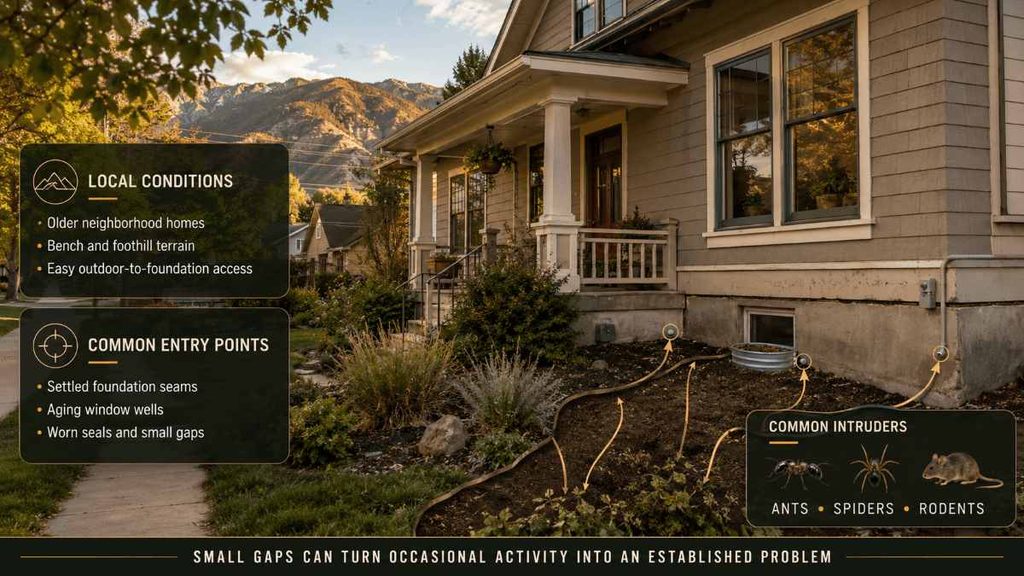
Salt Lake City has a lot going for it, and unfortunately that includes easy pest access in many neighborhoods. Older homes in areas like the Avenues, Sugar House, and Millcreek, along with properties backing up to benches and foothill terrain, give ants, spiders, and rodents a straight outdoor path to the foundation.
Older construction also tends to carry more small gaps than newer builds; foundations settle over decades, window wells age and shift, and sealing materials standard when a home was built often fall short of what is used today. None of this means every Salt Lake City home has a problem. It does mean the conditions that let small pest activity turn into an established one are more common here than average.
What Does a Preventive Pest Control Maintenance Plan Actually Involve
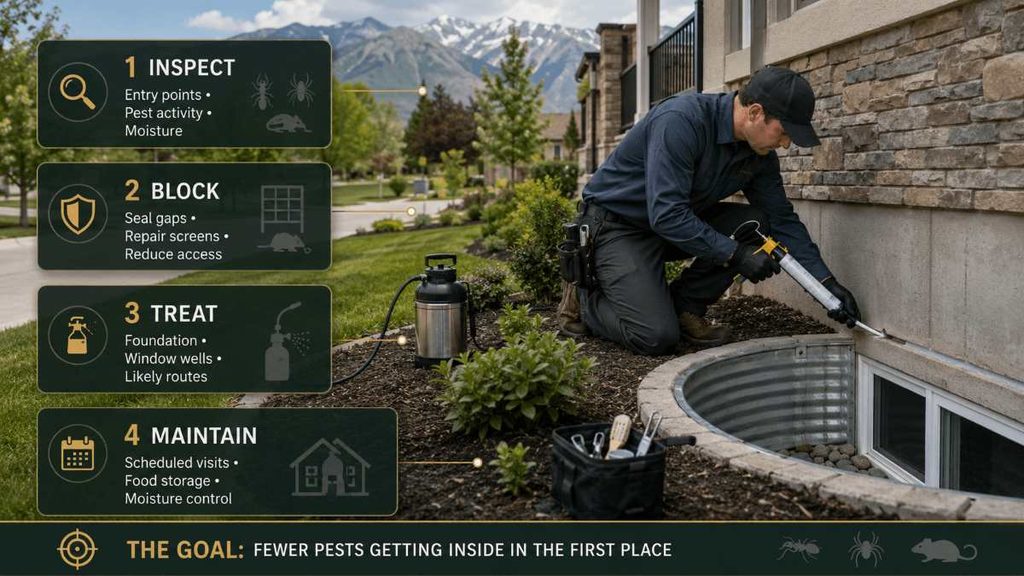
Preventive pest control is ongoing, scheduled treatment aimed at the entry points and conditions that let pests in, rather than a single spray applied after they are already inside.
The National Pest Management Association points to sealing entry points as one of the most effective long-term steps a homeowner can take, and that is exactly where a maintenance plan starts. A technician looks at where ants, spiders, and rodents are most likely to enter, treats those areas before activity builds up, and walks you through simple habits, keeping screens in good repair, storing food properly, and managing exterior moisture- that keep your home less appealing between visits. The goal is fewer pests showing up at all, not just dealing with them once they do.
How Does Quarterly Pest Control in Salt Lake City Fit Into Prevention
That kind of ongoing attention is exactly what Beeline’s quarterly plan is built around: a treatment roughly every three months that keeps a protective barrier in place year-round rather than reacting only when something is already inside. Our guarantee article covers what happens if activity shows up between visits, and our quarterly scheduling guide explains how the cadence works if you want the specifics.

What Waiting Actually Costs You
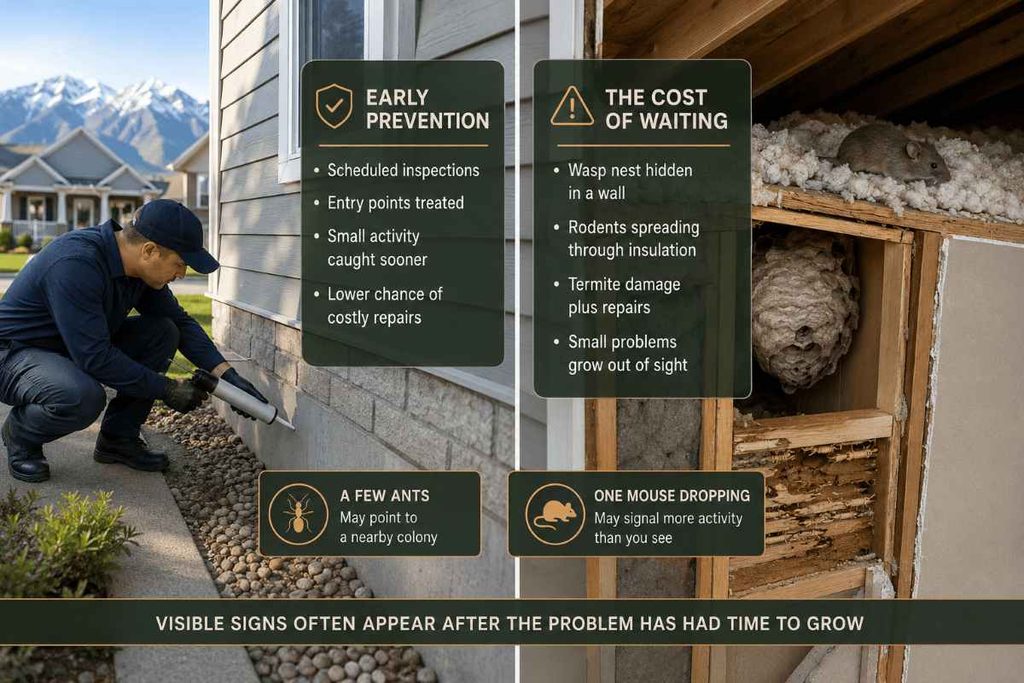
A recurring maintenance fee is real money, but it is small compared with what a full infestation can cost. Removing an established wasp nest from inside a wall, treating a rodent problem that has spread through insulation, or addressing termite damage all cost significantly more than preventing them would have, before any repairs the pests caused along the way. Waiting also gives a small problem time to grow.
A few ants in the kitchen can mean an established colony nearby, and a single mouse dropping can mean more mice than you realize. By the time a problem is visible enough to notice, it has typically had time to grow, which is exactly what a maintenance plan is designed to catch earlier. Our cost guide breaks down what a typical treatment runs, prevention or otherwise.
Does Homeowners Insurance Cover Pest Damage
Usually not, though it depends on your specific policy, so it is worth checking with your provider rather than assuming either way. Most standard homeowners policies treat pest damage as a maintenance issue rather than a covered peril, the same way they treat ordinary wear and tear.
That gap is part of why prevention carries more financial weight than it might seem; the cost of repairing pest damage typically falls entirely on the homeowner.
What Can You Do Yourself Between Professional Visits
A few habits go a long way between scheduled treatments, especially in a Salt Lake City home with more entry points than a newer build.
- Keep door and window screens in good repair, and check older window wells for gaps since they shift over time.
- Store food in sealed containers and manage exterior moisture like leaky hose bibs or clogged gutters.
- Seal obvious gaps around foundations and utility lines when you spot them rather than waiting for the next visit.
None of this replaces professional treatment, but it does make your home a less attractive target in between visits.

How Do You Get Started With Preventive Pest Control in Salt Lake City
Getting started is simple: a professional technician visits, walks the property, identifies your home’s specific entry points and risk factors, and sets up a plan around what they find rather than a generic package. Quarterly visits then keep things maintained, with emergency response available if something unexpected shows up in between. Our Salt Lake City service page has more on coverage in your area.

Examples
Take a homeowner near the East Bench who notices a few ants on the counter each spring and finally schedules a preventive plan rather than spraying store-bought pesticide every few weeks, eliminating the recurring problem instead of just the visible ants.
Someone in an older Sugar House bungalow skips prevention for a few years, then discovers a mouse problem has spread into the attic insulation, turning what could have been a simple visit into a far more involved treatment. And a wasp nest forming under an eave in Millcreek gets called in as soon as it is spotted, catching it early enough that removal takes one visit instead of a bigger job later.
Expert Tips
If your home backs up to a bench or foothill area, plan on a slightly earlier fall inspection than homes farther from that terrain, since activity tends to pick up sooner there. Walk the exterior once a season looking for new gaps or cracks near older foundations and window wells specifically, the spots most likely to develop a new entry point. And if pest activity picks up right after a change in weather, mention that to your technician; seasonal timing often points to exactly where the pests are coming from.
Conclusion
Prevention isn’t about eliminating every bug that ever wanders near your home; it is about catching the conditions that let a small problem become a large one before it happens. In a Salt Lake City home, where older construction and foothill terrain already give pests more opportunity, a regular maintenance plan protects both your home and your budget.
Ready to set up a plan built around your specific property? Contact Beeline Pest Control to schedule a preventive pest control visit, and we will take it from there.
Frequently Asked Questions
How is preventive pest control different from a one-time treatment?
A one-time treatment addresses an existing problem, while preventive service maintains a protective barrier year-round so problems are less likely to start. Many homeowners use one-time service for an active issue, then move to a quarterly plan afterward.
What happens if I need to reschedule a quarterly visit?
Rescheduling is straightforward; your technician moves the visit rather than skipping it, since a missed window is exactly the kind of gap that lets pest pressure build back up. It is worth rescheduling promptly rather than letting too much time pass between visits.
Will prevention completely stop pests from ever getting inside?
No plan makes a home completely pest-proof, but consistent prevention significantly reduces how often pests get in and how established they become when they do. It is about reducing risk, not promising zero activity.
Is preventive pest control worth it if I have not had a problem yet?
Yes, prevention is most effective before a problem starts, since it addresses entry points and conditions rather than an existing infestation. Waiting until you see pests usually means the underlying conditions have already been in place for a while.
Are the products used in preventive treatments safe for kids and pets?
Yes, the products used in routine preventive treatments are chosen to be safe around families and pets once applied and dried according to label instructions. Ask your technician about any specific sensitivities before your visit.
Does preventive pest control help with pests other than ants and spiders?
Yes, a preventive plan generally covers the common household pests in Utah, including ants, spiders, mice, and seasonal invaders, not just one pest. Specialty pests like termites are typically handled as a separate inspection and treatment.
What is the biggest sign a home needs preventive service rather than a one-time fix?
Recurring activity in the same area, even small amounts, usually points to an ongoing entry point rather than an isolated incident. If the same spot keeps producing pests season after season, prevention addresses the cause instead of just the symptom.
Does older construction really make that much difference in pest risk?
It can, since older foundations, window wells, and siding tend to develop more small gaps over time than newer, tighter construction. It is one factor among several, alongside landscaping and proximity to open space.
Can I switch from one-time treatments to a quarterly plan later?
Yes, many homeowners start with a one-time treatment for an active problem and move to quarterly service once that is resolved. There is no long-term contract required to make that switch.
What should I have ready when I schedule my first preventive visit?
Just a general sense of any pest activity you have noticed and access to the areas around your home’s foundation and entry points. The technician will handle identifying the specific risk factors during the visit itself.
Next: Beeline’s Guarantee, Explained: What’s Covered and For How Long